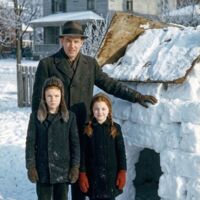
Maggie remembers the blizzard of 1956, when she was eight and her brother Tommy was ten, and the two of them spent days building an ambitious snow fort in the backyard with help from their father. What stayed with her most was the blue-gold glow of candlelight on the snow walls from inside — a moment of childhood wonder she still carries. The story is threaded with vivid details of their mother banging a pot to call them in, cocoa with too many marshmallows, and the warmth of the kitchen radiator, painting a portrait of a family in a specific winter that feels both ordinary and luminous.
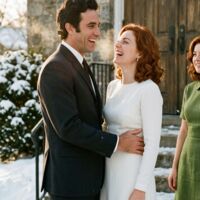
Maggie tells the story of meeting her husband Harold at a Saturday night dance on Thoreau Street in October 1968, after her daughter Sarah insisted she share it. Her roommate Betty Kowalski spent an hour on her hair and lent her a green dress, and then a serious young man in a terrible plaid flannel shirt asked her to dance. He stepped on both her feet, she said something sharp she probably shouldn't have, and he tipped his head back and laughed — and that was the beginning of fifty-four years together.
Maggie remembers over fifty years of Sunday mornings when her husband Harold made blueberry pancakes from his mother Grace's unwritten recipe — flipping them without a spatula, humming without knowing it, while their children Sarah and David came downstairs in pajamas. A blueberry stain on the ceiling from a pancake flipped too hard became a family legend retold every Thanksgiving. After Harold's death, Maggie tried to recreate the pancakes herself, but something was always off — and what she notices most now is how quiet the kitchen is without him.
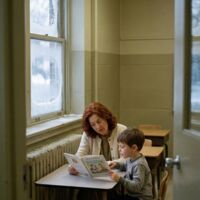
Maggie looks back on her 38 years teaching first grade at Emerson Elementary, zeroing in on a quiet six-year-old named Marcus in 1987 whom the other teachers had already written off. Day after day she sat with him after lunch, reading picture books and waiting for something to click, while her colleague Diane Kowalski urged her to just file the referral. It's a story about stubborn faith in a child no one else believed in — and about what it meant to teach kids to read the word "cat" in a world where Eddie Flanagan came home from Vietnam missing an arm.
Maggie remembers the morning after her husband Harold died — reaching for his side of the bed, smelling his Irish Spring soap on the pillow, and taking two mugs out of the cabinet the way she always had, filling his blue lobster mug and setting it by the window where he used to stand. With Sarah sleeping on the couch and David already back in Portland to be with sick little Lily, she describes the quiet rituals of grief that the body performs before the mind catches up — the reading glasses she still dusts around three years later, the week of two coffees before she made herself stop. It's a story about how loss lives not in the big moments but in the small, stubborn habits of a shared life.
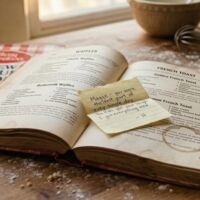
Six months after Harold died, Maggie pulled down his mother Grace's old Betty Crocker cookbook looking for the pancake recipe — and a folded piece of yellow legal pad paper fell out. It was a note in Harold's handwriting, just two lines: telling her she was the best part of every day, and that the kids got her laugh. Harold was never a talker, and Maggie will never know if he tucked that note there knowing she'd find it only after he was gone — but it said everything he never said out loud.
Maggie speaks directly to her four grandchildren — Emma, Jack, Lily, and Sam — explaining why she's recording these stories: her memory is slipping, and she wants them to have her words when she can no longer recall them herself. She passes along her mother's wisdom about finding the extraordinary in the ordinary, offers each grandchild a piece of personal advice, and threads her late husband Harold's quiet, steady presence through it all. It's a love letter disguised as a goodbye, warm and funny and achingly honest, ending the only way Maggie knows how — by taking the long way to say something simple.